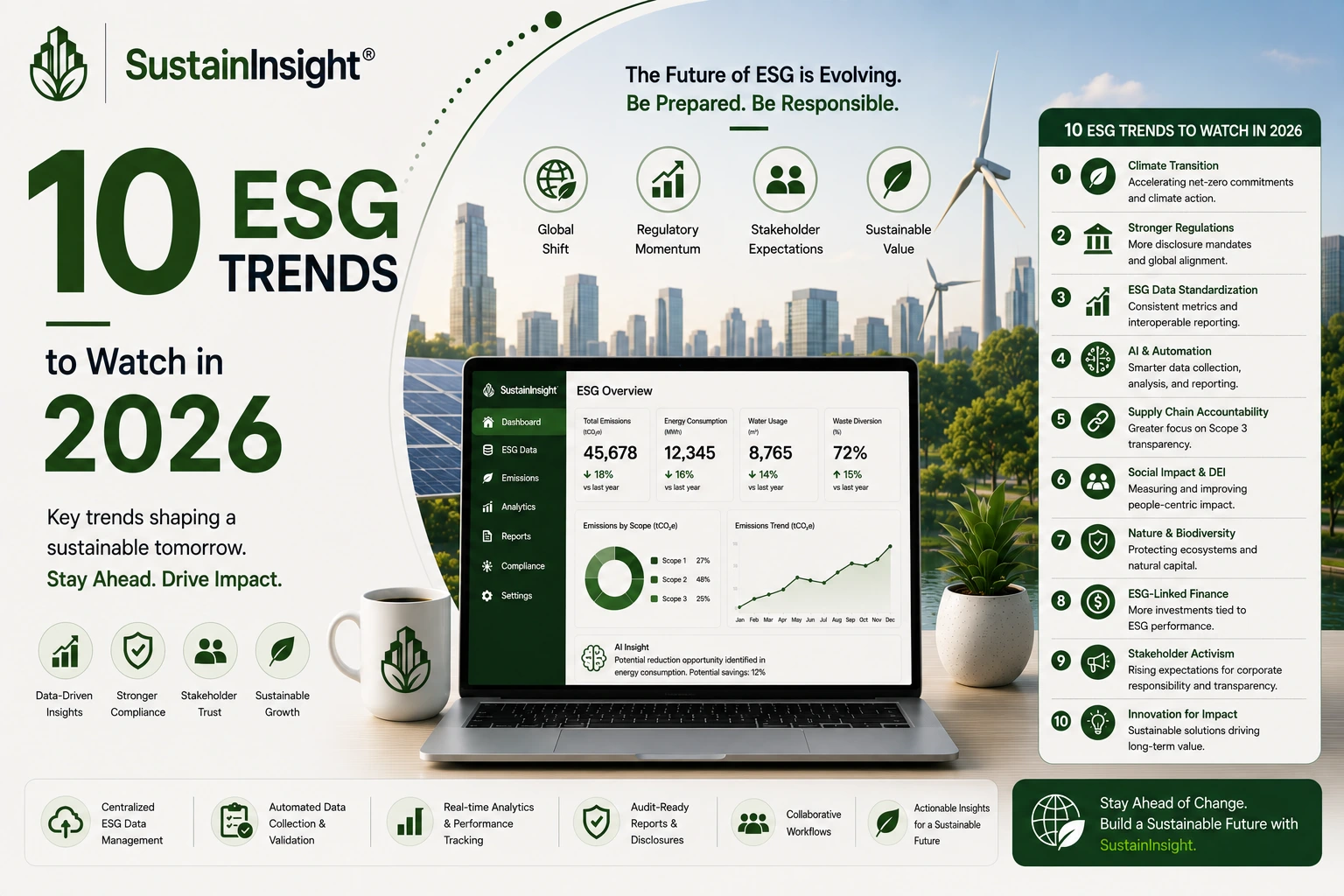
ESG reporting continues to evolve quickly, shaped by tightening global regulation, maturing technology, and growing expectations from investors and regulators alike. For businesses across the UAE and GCC in particular, staying ahead of these shifts means being prepared before requirements become mandatory rather than reacting after the fact. Here are the 10 ESG trends shaping 2026.
10 ESG Trends to Watch in 2026
1. ISSB Becoming the Global Reporting Baseline
As more jurisdictions adopt IFRS S1 and S2 as their reference standard, ISSB is solidifying its position as the global baseline for sustainability and climate disclosure, increasingly superseding earlier voluntary frameworks like TCFD. Businesses building reporting processes today should align with ISSB's structure rather than treating it as one framework among many.
2. Mandatory Scope 3 Emissions Reporting Expanding
Scope 3 emissions — long treated as optional or "best effort" — are increasingly required under frameworks like CSRD and California's SB-253. Businesses that haven't yet built reliable Scope 3 data collection processes should prioritize this now, as it's typically the most time-consuming category to operationalize.
3. AI Becoming Standard in ESG Reporting Workflows
AI-powered data extraction, emissions estimation, and report generation are moving from early-adopter tools to standard features across ESG reporting platforms, significantly reducing the manual burden of sustainability reporting.
4. Regulatory Simplification and Scope Adjustments Continue
Even as disclosure requirements expand in some areas, regulators in the EU and elsewhere have also been adjusting scope and timelines (such as ongoing CSRD "Omnibus" simplification discussions) in response to business feedback. Businesses should expect continued regulatory refinement rather than a single fixed set of rules.
5. Nature and Biodiversity Disclosure Gaining Attention
Beyond climate-specific reporting, frameworks addressing nature-related risks and biodiversity impact (building on efforts like the TNFD) are gaining traction, expanding the scope of what "ESG reporting" is expected to cover beyond emissions alone.
6. Supply Chain ESG Due Diligence Tightening
Mechanisms like the EU's CBAM and growing supply chain due diligence expectations are pushing ESG requirements further into supplier relationships, making supplier-level ESG data collection increasingly important for businesses trading internationally.
7. Third-Party Assurance Becoming Standard
As frameworks like CSRD and SB-253 mandate external verification of ESG data, assurance is shifting from a differentiator to a baseline expectation — pushing businesses to prepare audit-ready data and documentation well before assurance deadlines arrive.
8. UAE and GCC Regional Frameworks Maturing
Regional sustainability initiatives — from Dubai Sustainable Tourism to the UAE's Net Zero 2050 strategy — continue to mature, with growing expectations for sector-specific sustainability reporting across UAE industries beyond the sectors where requirements first took hold.
9. Sustainability-Linked Financing Growing
Green loans and sustainability-linked financing, where borrowing terms are tied to ESG performance, continue to grow, making strong sustainability data directly relevant to a business's cost of capital.
10. Continuous, Real-Time ESG Monitoring Replacing Annual Reporting Cycles
Rather than treating ESG reporting as an annual exercise, more businesses are moving toward continuous data collection and real-time dashboards, allowing sustainability performance to be monitored and managed throughout the year rather than reconstructed after the fact.
Why These Trends Matter for UAE and GCC Businesses
As global frameworks like ISSB and CSRD extend their reach and UAE-specific initiatives continue to mature, businesses across the region face a growing, overlapping set of expectations. Preparing now — rather than reacting once requirements become mandatory — puts UAE and GCC businesses in a stronger competitive position.
How SustainInsight Helps Businesses Stay Ahead?
SustainInsight is an AI-powered ESG and sustainability platform built to help businesses adapt to these trends. Key capabilities include:
-
AI-powered ESG and sustainability reporting
-
Automated Scope 1, 2 & 3 emissions tracking
-
Real-time ESG dashboards for continuous monitoring
-
Compliance alignment with GRI, ISSB, CSRD, TCFD, ISO 14064-1, and the GHG Protocol
-
Audit-ready reporting built for third-party assurance
Conclusion
ESG reporting in 2026 is being shaped by expanding Scope 3 requirements, growing AI adoption, maturing regional frameworks, and rising assurance expectations. Businesses that build flexible, AI-powered reporting infrastructure now will be better positioned to adapt as these trends continue to evolve.