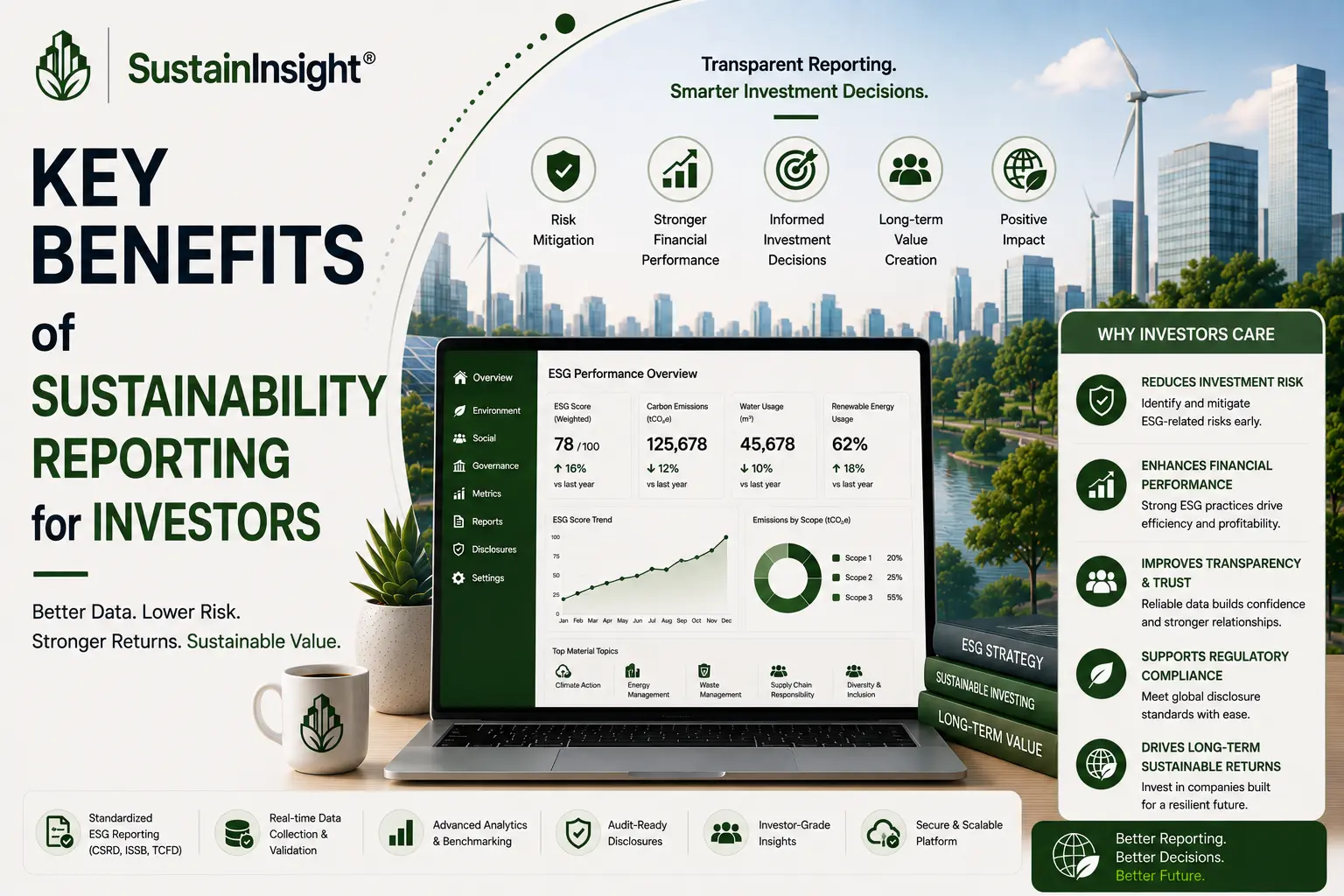
Sustainability reporting isn't just a compliance exercise for the companies producing it — it's increasingly central to how investors assess risk, allocate capital, and engage with the businesses they invest in. As ESG-related regulation like SFDR pushes asset managers toward more rigorous disclosure requirements, understanding why sustainability reporting matters to investors also helps companies understand what makes their own reporting genuinely useful, rather than a box-checking exercise.
Why Sustainability Reporting Matters to Investors?
Investors use sustainability data to answer questions financial statements alone can't: How exposed is this company to climate-related regulatory or physical risk? How well is it managing its supply chain? Is its governance structure built to manage long-term challenges? Reliable sustainability reporting gives investors the data to answer these questions with confidence rather than guesswork.
Key Benefits of Sustainability Reporting for Investors
1. Improves Risk Assessment
Sustainability data helps investors identify climate, regulatory, and reputational risks that aren't visible in traditional financial statements, supporting more complete due diligence before and during an investment.
2. Enables Comparability Across Investment Opportunities
Standardized reporting against frameworks like GRI, ISSB, and CSRD allows investors to compare sustainability performance across companies and sectors on a consistent basis, rather than relying on inconsistent, self-defined metrics.
3. Supports Regulatory Compliance
Asset managers subject to regulations like SFDR need reliable ESG data from portfolio companies to meet their own disclosure obligations, making investee company reporting quality directly relevant to investor compliance.
4. Identifies Long-Term Value Creation Opportunities
Companies that manage resource efficiency, workforce practices, and governance well are often better positioned for long-term resilience — sustainability reporting gives investors visibility into these dynamics beyond quarterly financial results.
5. Enables Active Ownership and Engagement
Investors increasingly use sustainability data to engage directly with portfolio companies on specific improvement areas, using reported metrics to track progress over time rather than relying on general commitments.
6. Reduces Greenwashing Risk in Investment Decisions
Detailed, assured sustainability reporting — particularly under frameworks requiring third-party verification — helps investors distinguish genuine sustainability performance from marketing claims.
7. Supports Stewardship and Reporting Obligations
Institutional investors, including pension funds and sovereign wealth vehicles, increasingly have their own stewardship and disclosure requirements that depend on receiving reliable sustainability data from the companies in their portfolios.
What This Means for Companies Seeking Investment?
For companies — including those across the UAE and GCC seeking capital from international investors — understanding what investors actually need from sustainability reporting is directly relevant to fundraising and capital access. Investor-grade reporting means standardized framework alignment, auditable data, and genuine transparency about both progress and gaps, not just favorable narratives.
How SustainInsight Helps Companies Produce Investor-Grade Reporting?
SustainInsight is an AI-powered ESG and sustainability platform that helps businesses produce the kind of reliable, standardized sustainability data investors increasingly expect. Key capabilities include:
-
AI-powered ESG and sustainability reporting
-
Automated Scope 1, Scope 2 & Scope 3 emissions tracking
-
Compliance alignment with GRI, ISSB, CSRD, TCFD, ISO 14064-1, and the GHG Protocol
-
Audit-ready reporting built for investor due diligence
-
Real-time ESG dashboards for ongoing performance tracking
By producing standardized, audit-ready sustainability data, companies using SustainInsight are better positioned to meet the expectations of sustainability-focused investors.
Conclusion
Sustainability reporting benefits investors by improving risk assessment, enabling comparability, supporting regulatory compliance, and reducing exposure to greenwashing. For companies, understanding these investor priorities is directly useful — reporting built to genuinely inform investor decisions, rather than simply satisfy a compliance checklist, is more likely to support successful capital raising.