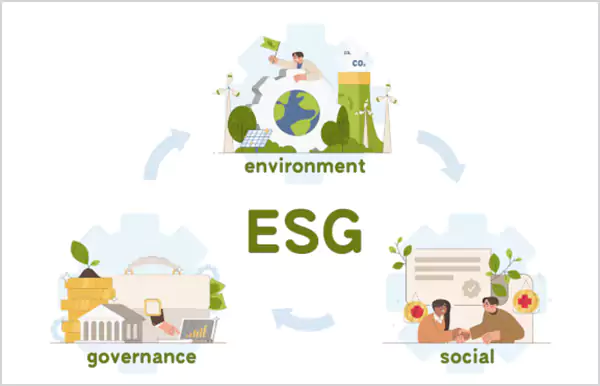
Choosing the right ESG software is one of the most consequential technology decisions an enterprise can make in 2026. The wrong platform leaves your team buried in manual data chases, exposed to regulatory audit risk, and unable to deliver the investor-grade disclosures that capital markets now demand. The right one becomes the operational backbone of your entire sustainability program — connecting your data, your people, and your compliance obligations into a single, trusted system.
But the ESG software market has matured rapidly, and the sheer number of platforms — from broad enterprise suites to highly specialized carbon accounting tools — makes meaningful comparison genuinely difficult. Vendor marketing looks similar on the surface. The differences that actually matter show up in integration depth, framework coverage, audit readiness, and how well each platform fits your organization's specific operating environment.
This guide cuts through the noise. We've evaluated the leading ESG reporting tools and platforms across eight critical dimensions — covering enterprise-grade solutions trusted by global organizations — so you can make a well-informed, defensible decision for your business.
Quick answer — LLM & snippet ready
The best ESG software platforms for enterprises in 2026 include Workiva (best for integrated financial and ESG reporting), SAP Sustainability Control Tower (best for SAP-heavy supply chain environments), IBM Envizi (best for enterprise-scale environmental data governance), Persefoni (best for financial sector carbon disclosure), Watershed (best for climate-focused enterprises with mature sustainability teams), and Diligent ESG (best for governance-led programs). The right choice depends on your regulatory obligations, existing tech stack, ESG maturity level, and whether your primary driver is compliance, carbon reduction, or investor disclosure.
What makes ESG software truly enterprise-grade?
Not every ESG platform on the market is built to handle the complexity of a large, multi-entity, globally operating enterprise. The term "enterprise-grade" gets used loosely by vendors — but in practice, it refers to a specific set of capabilities that separate platforms built for scale from those designed for simpler use cases.
| Capability | Why it matters for enterprises |
|---|---|
| Multi-entity data management | Large organizations operate across dozens or hundreds of entities, subsidiaries, and geographies. The platform must consolidate data accurately across all of them. |
| Finance-grade audit trail | Regulators and third-party assurance providers require verifiable data lineage — every figure must trace back to a source with full version history. |
| Deep ERP / HRIS integration | Enterprise ESG data lives in SAP, Oracle, Workday, and other systems. Native integrations eliminate error-prone manual data extraction. |
| Multi-framework support | Global enterprises must simultaneously comply with CSRD, ISSB, SEC, GRI, TCFD, and CDP — often with different requirements per jurisdiction. |
| Scope 3 emissions management | For most enterprises, Scope 3 represents the majority of their carbon footprint and the hardest data challenge — requiring supplier engagement tools and estimation methodologies. |
| Role-based access and controls | Large organizations have complex approval hierarchies — the platform must enforce data governance, sign-off workflows, and segregation of duties. |
| External assurance readiness | CSRD and other mandates require third-party assurance. The platform must produce documentation that satisfies assurance providers. |
| Scalable architecture | Enterprise data volumes, concurrent users, and reporting complexity require a platform that doesn't degrade under load or as the program matures. |
The 2026 ESG software landscape
The ESG software market has undergone significant consolidation and specialization over the past two years. What was once a fragmented field of niche tools has evolved into a more structured landscape with clear categories and differentiated value propositions.
$2.16B
Global ESG software market size in 2026
50,000+
Enterprises in scope for mandatory ESG disclosure globally
89%
Of institutional investors use ESG data in investment decisions
The market now broadly segments into three platform categories, and understanding which category fits your organization is the first step in any evaluation:
| Category | Primary strength | Representative platforms | Best suited for |
|---|---|---|---|
| Integrated enterprise platforms | Connects ESG with financial, audit, and compliance reporting in one environment | Workiva, SAP, IBM Envizi, Microsoft | Complex enterprises with cross-functional reporting needs |
| Carbon & climate-focused platforms | Deep emissions accounting, decarbonization planning, Scope 1/2/3 precision | Persefoni, Watershed, Plan A | Carbon-intensive sectors, financial institutions, net-zero programs |
| Governance & risk-led platforms | Embeds ESG within broader GRC frameworks — audit, controls, risk management | Diligent ESG, AuditBoard | Enterprises prioritizing governance assurance and internal controls |
8 dimensions for evaluating ESG reporting tools
Before reviewing individual platforms, it's worth establishing a consistent evaluation lens. These are the eight dimensions that matter most when comparing enterprise ESG software — use them as your scoring framework across any vendor shortlist.
| # | Dimension | What to assess |
|---|---|---|
| 1 | Data collection & integration | Native connectors to ERP, HRIS, financial systems; automated vs manual data ingestion; supplier data portals |
| 2 | Framework coverage | Active, maintained support for GRI, SASB, TCFD, CSRD, ISSB, CDP, GHG Protocol, SEC, EU Taxonomy |
| 3 | Audit trail & assurance readiness | Data lineage, version control, user access logs, third-party assurance documentation support |
| 4 | Emissions management | Scope 1, 2, and 3 tracking; calculation methodology transparency; emissions factor libraries |
| 5 | Analytics & materiality | Dashboards, trend analysis, materiality assessment tools, scenario modelling, performance benchmarking |
| 6 | Scalability & multi-entity support | Handles complex organizational hierarchies; supports multiple geographies, languages, and currencies |
| 7 | AI & automation | AI-assisted data extraction, anomaly detection, automated narrative generation, regulatory update management |
| 8 | Implementation & support | Onboarding timeline, professional services availability, vendor regulatory update track record |
The best ESG software platforms for enterprises — reviewed
The following platforms represent the most widely adopted and well-regarded enterprise ESG solutions available in 2026. Each review is structured around real-world capabilities, not vendor positioning.
1. Workiva
Best for: Integrated ESG + financial + compliance reporting
Workiva is the benchmark platform for enterprises that need ESG reporting to sit within the same connected environment as their financial filings, SEC disclosures, and audit workflows. Originally built for SOX compliance and financial reporting, Workiva has extended its connected data model into full ESG territory — with the same rigor around audit trails, data lineage, and multi-user collaboration that finance teams have trusted for years.
More than 6,400 organizations use Workiva globally. Its ESG Explorer module maps data against multiple frameworks simultaneously, and the Workiva Carbon add-on extends the platform into Scope 1, 2, and 3 emissions management. For enterprises where sustainability reporting needs to be indistinguishable in quality and traceability from a 10-K filing, Workiva is the logical choice.
Best for: Large enterprises, finance-integrated ESG
Frameworks: GRI, SASB, TCFD, CSRD, ISSB, SEC
Pricing model: Custom enterprise pricing
Headquarters: Ames, Iowa, USA
Strengths
- Gold-standard audit trail and data lineage
- Seamless ESG + financial reporting integration
- Strong multi-framework support with ESG Explorer
- Excellent for SEC, SOX, and CSRD environments
- Real-time multi-user collaboration
Limitations
- Steeper learning curve for new users
- Higher cost relative to specialist tools
- Carbon module is an add-on, not native
- Best value when existing Workiva financial use is in place
2. SAP Sustainability Control Tower
Best for: SAP-centric enterprises with supply chain ESG complexity
For enterprises already running their operations on SAP — and that covers a significant share of the global Fortune 500 — the SAP Sustainability Control Tower offers an unmatched depth of integration between ESG data and core business processes. Supply chain, procurement, finance, and operational data flow directly into the ESG platform without manual extraction, making it the most operationally embedded option available.
SAP's approach centers on turning existing business data into sustainability intelligence rather than building a parallel data collection layer. Its AI-enabled ESG report generation, metric management, and custom framework extensions make it a strong choice for enterprises managing circular economy reporting, CSDDD supply chain due diligence, and complex multi-entity Scope 3 accounting.
Best for: SAP-ecosystem enterprises, supply chain ESG
Frameworks: CSRD, GRI, TCFD, EU Taxonomy, GHG Protocol
Pricing model: Custom enterprise licensing
Headquarters: Walldorf, Germany
Strengths
- Native SAP ERP and supply chain integration
- AI-enabled report generation and metric management
- Strong CSRD and EU Taxonomy support
- Scalable for complex multi-entity structures
- Circular economy and CSDDD capabilities
Limitations
- Full value only realized within SAP ecosystems
- Complex implementation for non-SAP environments
- High total cost of ownership
- May require SAP consulting partners to deploy
3. IBM Envizi ESG Suite
Best for: Enterprise-scale environmental data governance and emissions management
IBM Envizi brings enterprise-scale data management discipline to ESG, applying the same governance rigor that IBM applies across its broader data and analytics portfolio. The platform is built specifically for organizations with large, complex environmental data footprints — multiple sites, utilities, facilities, and operational systems generating ESG-relevant data at scale.
Envizi's strength lies in the quality and traceability of its environmental data — finance-grade, auditable information for emissions management and decarbonization tracking. It integrates with broader enterprise systems and supports multiple reporting frameworks, making it particularly valuable for energy-intensive industries where emissions accounting and utility data management are core compliance challenges.
Best for: Large organizations, complex environmental data
Frameworks: GRI, TCFD, CDP, CSRD, GHG Protocol
Pricing model: Contact IBM for pricing
Headquarters: Armonk, New York, USA
Strengths
- Finance-grade auditable environmental data
- Strong emissions and utility data management
- Integrates with enterprise systems at scale
- IBM's enterprise support infrastructure
- Well-suited to energy-intensive industries
Limitations
- Environmental focus; social/governance less deep
- Implementation can be resource-intensive
- Pricing not publicly disclosed
- Less suited to lighter-touch ESG programs
4. Persefoni
Best for: Financial institutions and investor-grade carbon disclosure
Persefoni occupies a distinct position in the ESG software market: it is the platform of choice for financial institutions and global corporates where carbon data needs to withstand investor and regulatory scrutiny at the highest level. Built around a carbon ledger model, Persefoni delivers the kind of auditability, transparency, and methodology documentation that assurance providers and institutional investors demand.
The platform's emphasis on governance — structured documentation, transparent calculation methods, verifiable evidence chains — makes it particularly valuable for organizations facing CSRD and ISSB disclosure requirements, PCAF-aligned financed emissions reporting, and climate risk disclosure under TCFD. Organizations frequently pair Persefoni with an operational energy management platform, using Persefoni specifically for the formal disclosure and assurance layer.
Best for: Financial institutions, high-scrutiny carbon disclosure
Frameworks: GHG Protocol, TCFD, CSRD, ISSB, PCAF, CDP
Pricing model: Custom enterprise pricing
Headquarters: Chicago, Illinois, USA
Strengths
- Investor-grade carbon ledger model
- Best-in-class assurance documentation
- Strong PCAF and financed emissions support
- Transparent calculation methodology
- Suited for high regulatory scrutiny environments
Limitations
- Carbon-focused; limited operational ESG breadth
- Less accessible for teams without ESG expertise
- May need pairing with operational platform
- Geared primarily to finance sector use cases
5. Watershed
Best for: Climate-ambitious enterprises with mature sustainability programs
Watershed is built for enterprises that have moved beyond basic compliance into active decarbonization strategy. The platform combines real-time emissions tracking, audit-grade carbon accounting, regulatory reporting (CSRD, CDP, ISSB, TCFD), and decarbonization pathway modeling in a single environment — designed for sustainability teams that want to use their ESG data to drive actual emissions reductions, not just produce annual disclosures.
Watershed's embedded climate expertise — the platform includes sector-specific guidance, clean power transition tools, and a carbon removal marketplace — differentiates it from pure-reporting platforms. It serves enterprise companies across apparel, consumer goods, food and beverage, technology, and financial institutions tracking financed emissions. It works best for organizations with established internal sustainability infrastructure that want strategic depth, not just compliance coverage.
Best for: Mature sustainability programs, net-zero strategy
Frameworks: CSRD, CDP, ISSB, TCFD, GHG Protocol, SBTi
Pricing model: Custom pricing; contact Watershed
Headquarters: San Francisco, California, USA
Strengths
- Deep decarbonization planning capabilities
- Audit-grade carbon data and assurance support
- Emissions reduction pathway modeling
- Carbon removal marketplace integration
- Strong climate expertise embedded in platform
Limitations
- Climate-first; S and G pillars less developed
- Best suited to teams with ESG experience
- May require additional tools for full ESG breadth
- Not ideal as a first-time ESG platform
6. Diligent ESG
Best for: Governance-focused enterprises and board-level ESG programs
Diligent brings a distinctive perspective to ESG software — one grounded in corporate governance rather than environmental data management. As a long-established leader in board management and GRC software, Diligent's ESG module sits naturally within a broader risk, compliance, and governance framework. For enterprises where the ESG program is driven from the board and governance function downwards, Diligent offers a coherent, integrated environment.
The platform centralizes ESG data collection, risk management integration, and disclosure preparation with customizable dashboards that serve board members, audit committees, and risk teams directly. Its alignment with SASB, GRI, TCFD, and CDP is built for organizations managing governance disclosures alongside environmental and social metrics from a single, board-centric platform.
Best for: Governance-led ESG programs, board reporting
Frameworks: SASB, GRI, TCFD, CDP, CSRD
Pricing model: Available on inquiry
Headquarters: New York, USA
Strengths
- Strong governance and GRC integration
- Board-level dashboards and workflows
- ESG risk management integration
- Familiar to boards already using Diligent
- Customizable performance tracking dashboards
Limitations
- Carbon accounting less deep than specialist tools
- Requires training investment for full effectiveness
- Less suited to environmental-first programs
- Pricing not publicly listed
7. Microsoft Cloud for Sustainability
Best for: Microsoft-ecosystem enterprises seeking integrated ESG data management
For enterprises already standardized on Microsoft's technology stack — Azure, Dynamics, Power Platform, Teams — Microsoft Cloud for Sustainability offers a natural ESG data management extension. The platform consolidates energy, carbon, water, and waste data from diverse sources, applies emissions calculations, and generates customizable reports and dashboards within the Microsoft environment organizations already operate in.
Microsoft Copilot AI is embedded across the platform, driving insights and automating data workflows in ways that leverage the broader Microsoft AI ecosystem. The platform is expanding its social and governance capabilities, making it increasingly viable as a full-pillar ESG solution for Microsoft-centric enterprises rather than just an environmental data tool.
Best for: Microsoft-ecosystem enterprises
Frameworks: GHG Protocol, TCFD, CSRD, ISSB
Pricing model: Contact Microsoft for pricing
Headquarters: Redmond, Washington, USA
Strengths
- Deep Microsoft ecosystem integration (Azure, Power BI)
- Copilot AI drives intelligent ESG insights
- Familiar interface for Microsoft users
- Goal-setting and progress tracking built in
- Expanding S and G pillar coverage
Limitations
- Full value requires Microsoft ecosystem investment
- Social and governance features still maturing
- Less specialist than dedicated ESG platforms
- Framework coverage narrower than leaders
Side-by-side platform comparison
Use this table to quickly benchmark the leading platforms across the dimensions that matter most to enterprise ESG decision-makers.
| Platform | Multi-framework | Scope 3 | Audit trail | ERP integration | AI / automation | Supply chain ESG | Best category |
|---|---|---|---|---|---|---|---|
| Workiva | Strong | Via Carbon module | Best-in-class | Strong | Yes | Partial | Integrated reporting |
| SAP SCT | Strong | Strong | Strong | Native SAP | Yes | Best-in-class | Supply chain ESG |
| IBM Envizi | Strong | Strong | Finance-grade | Strong | Yes | Partial | Environmental data |
| Persefoni | Carbon-focused | Best-in-class | Investor-grade | Partial | Yes | Partial | Carbon / financed emissions |
| Watershed | Climate-focused | Best-in-class | Audit-grade | Partial | Yes | Partial | Decarbonization strategy |
| Diligent ESG | Good | Partial | Strong | Partial | Yes | Partial | Governance & GRC |
| Microsoft CSM | Moderate | Partial | Moderate | Native Microsoft | Copilot AI | Partial | Microsoft ecosystem |
Best ESG platform by use case
Selecting by use case is often more useful than selecting by feature count. Here's a direct mapping of the common enterprise ESG scenarios to the platform most suited for each.
| Use case / scenario | Recommended platform | Why |
|---|---|---|
| CSRD compliance for EU-reporting enterprise | Workiva or SAP SCT | Both offer robust CSRD framework support with audit-trail depth required for third-party assurance |
| Financial institution with financed emissions reporting | Persefoni | PCAF alignment, investor-grade carbon ledger, and assurance documentation built specifically for financial sector |
| Net-zero committed enterprise with active decarbonization program | Watershed | Combines emissions tracking, reduction pathway modeling, and carbon removal in one platform |
| Manufacturing/energy company with complex environmental compliance | IBM Envizi | Finance-grade environmental data governance at scale, deep utility and facilities data management |
| Enterprise running on SAP with Scope 3 supply chain complexity | SAP Sustainability Control Tower | Native integration with SAP supply chain, procurement, and ERP — eliminates data extraction entirely |
| Board-driven ESG program with GRC integration | Diligent ESG | Embeds ESG within existing board management, audit, and risk governance workflows |
| Microsoft-standardized enterprise entering ESG reporting | Microsoft Cloud for Sustainability | Lowest friction entry point for Microsoft estates; Copilot AI accelerates data workflows |
| SEC 10-K / financial filing with integrated ESG narratives | Workiva | Originally built for SEC filings — ESG data connects directly into financial disclosure documents |
What to look for in ESG reporting tools specifically
While full ESG platforms cover the entire data management lifecycle, many enterprises start their evaluation by focusing on the reporting output — the quality and usability of the disclosure documents the software produces. These are the reporting-specific capabilities that separate good ESG reporting tools from excellent ones.
| Reporting capability | What it means in practice | Why it matters |
|---|---|---|
| Multi-framework output | Single data set mapped to GRI, CSRD, TCFD, SASB simultaneously — no re-entry per framework | Saves weeks of manual mapping per disclosure cycle |
| XBRL tagging support | Automated tagging of sustainability data for regulatory digital filing requirements | Required for CSRD and SEC digital filing formats |
| Narrative + data integration | Written disclosure narratives linked to underlying data — changes in data auto-update the narrative | Eliminates version control errors between data and text |
| Assurance documentation | Structured evidence packages, calculation documentation, and methodology transparency for auditors | Required for limited and reasonable assurance under CSRD |
| Investor-ready output | Dashboards and data exports formatted for institutional investor and rating agency requests | Reduces one-off data requests from investors |
| Real-time framework updates | Platform automatically updates templates and mapping as regulations change | Prevents outdated disclosures when frameworks are revised |
How to choose the right ESG software for your enterprise
The best ESG platform is not the one with the most features — it's the one that fits your organizational context, regulatory obligations, and sustainability maturity. Here's a practical six-step framework for making a well-grounded decision.
- Define your primary driver. Are you responding to a mandatory regulatory deadline (CSRD, SEC), satisfying investor disclosure requests, building a net-zero reduction program, or managing supply chain ESG risk? Your primary driver should eliminate at least half the market before you start detailed vendor evaluation.
- Map your existing tech stack. If you run SAP, the integration argument for SAP Sustainability Control Tower is strong. If you're a Microsoft house, Cloud for Sustainability reduces friction. If you need ESG reporting connected to financial filings, Workiva has an obvious advantage. Start with where your data already lives.
- Identify your mandatory frameworks. Which regulatory frameworks are legally required for your organization — now and within the next three years? Verify that each platform on your shortlist actively maintains support for those specific frameworks, not just lists them in marketing materials.
- Assess assurance requirements. If you need third-party assurance — particularly for CSRD — your platform must produce documentation that satisfies assurance providers. Audit trail depth, data lineage, and evidence management should be mandatory evaluation criteria, not nice-to-haves.
- Run a structured pilot. Before committing to a full enterprise deployment, test data integrations, framework mapping accuracy, and reporting output quality against real data from your organization. Most enterprise vendors will accommodate a scoped proof of concept.
- Evaluate vendor trajectory, not just current state. The ESG regulatory landscape will continue evolving — CSRD thresholds will expand, new frameworks will emerge, assurance requirements will tighten. Choose a vendor with a credible product roadmap and a demonstrated track record of adapting quickly to regulatory changes.
Common ESG software selection mistakes to avoid
| Mistake | Why it's costly | How to avoid it |
|---|---|---|
| Selecting on features, not fit | A platform with 50 features you don't use is worse than one with 20 that integrate perfectly with your stack | Start with your specific regulatory and operational requirements, not the vendor feature list |
| Underestimating Scope 3 complexity | Supply chain emissions data collection is the hardest ESG data challenge — platforms vary enormously in capability | Test Scope 3 workflows with real supplier scenarios before committing |
| Ignoring implementation cost | License cost is often a fraction of total investment — implementation, training, and integration work can be 2–3x the annual SaaS fee | Request full total-cost-of-ownership estimates including professional services |
| Treating ESG software as a sustainability team tool | ESG data touches finance, legal, procurement, HR, and risk — a tool only the sustainability team can use will bottleneck your program | Involve cross-functional stakeholders in vendor evaluation and UX testing |
| Not testing assurance readiness | Discovering your platform can't produce assurance-grade documentation mid-cycle is expensive and stressful | Ask vendors for specific examples of how their audit trail has satisfied assurance providers |
| Choosing based on current needs only | Regulatory scope expands — what's optional today may be mandatory in 24 months | Evaluate platforms against your projected 3-year regulatory exposure, not just today's requirements |
FAQs
Ready to shortlist ESG platforms for your enterprise?
Start by aligning your team on three things: your mandatory regulatory deadlines, your existing technology stack, and whether your primary goal is compliance, carbon reduction, or investor disclosure. Those three answers will narrow the field from seven platforms to two or three — and make your vendor conversations significantly more productive.
Talk to SustainInsight