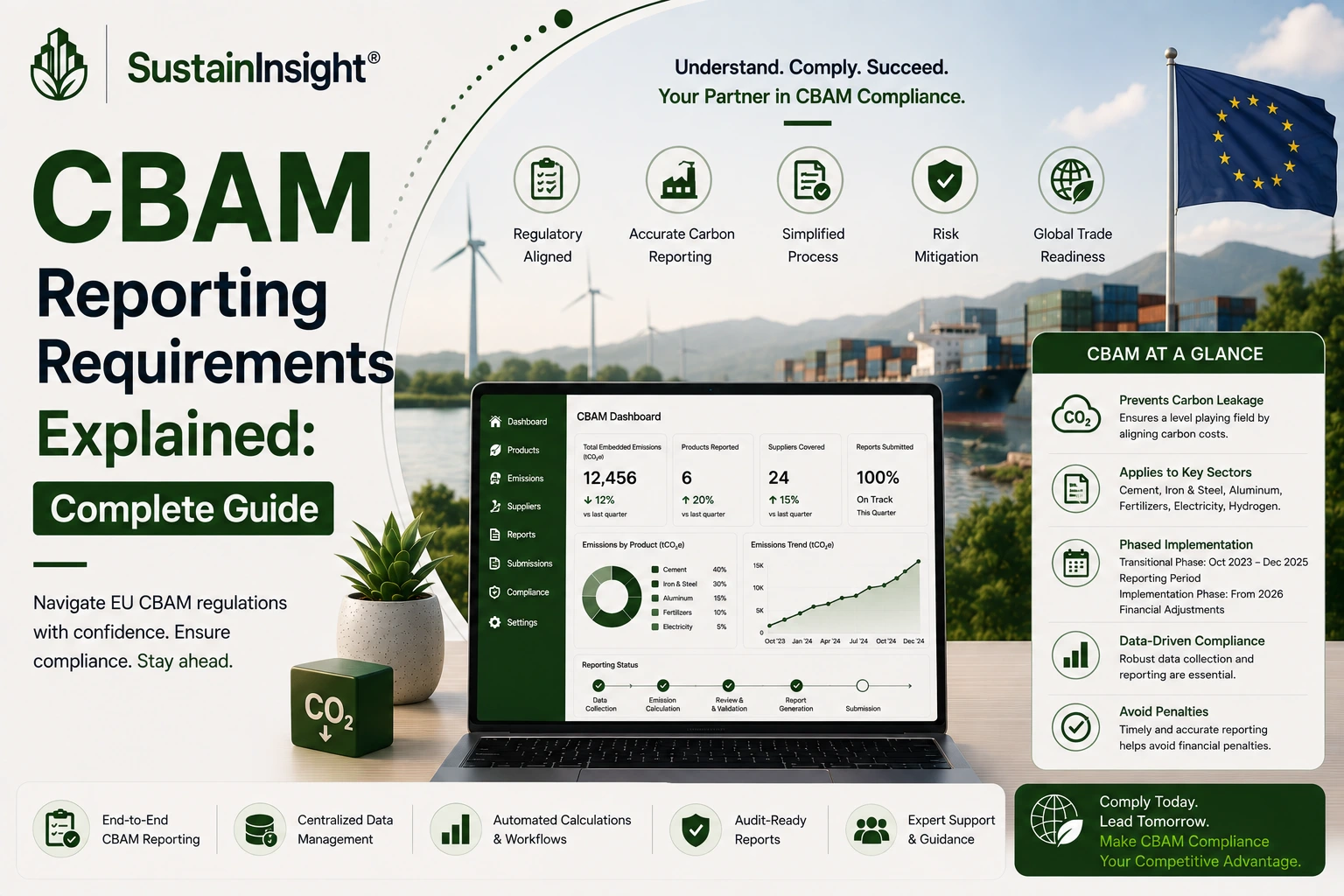
The EU's Carbon Border Adjustment Mechanism (CBAM) places a carbon cost on certain goods imported into the European Union, and it has direct implications for exporters well beyond Europe's borders — including UAE producers of aluminium, steel, cement, and other CBAM-covered goods. This guide explains what CBAM requires, who needs to report, and how exporters can prepare.
What Is CBAM?
CBAM is designed to prevent "carbon leakage" — the risk that companies shift carbon-intensive production to countries with less stringent climate policies, then import the resulting goods into the EU without an equivalent carbon cost. CBAM addresses this by requiring importers of certain goods to account for the embedded emissions in those products, aligning the carbon cost of imports with what EU producers already pay under the EU Emissions Trading System.
Which Goods Are Covered by CBAM?
CBAM initially covers carbon-intensive sectors most exposed to carbon leakage risk: iron and steel, cement, aluminium, fertilizers, electricity, and hydrogen. These sectors were selected because their production processes are typically emissions-intensive and their goods are widely traded internationally — including significant volumes produced in the UAE and wider GCC region.
Who Must Report Under CBAM?
Formally, CBAM reporting obligations fall on EU importers bringing CBAM-covered goods into the European Union. However, in practice, those importers depend on their suppliers — including UAE and GCC exporters — to provide accurate embedded emissions data for the goods being imported. This makes CBAM directly relevant to non-EU producers, even though the formal reporting obligation sits with the EU-based importer.
Key CBAM Reporting Requirements
Embedded Emissions Calculation
Exporters need to calculate the direct (and in some cases indirect) greenhouse gas emissions embedded in the production of CBAM-covered goods, following CBAM's specified methodology.
Quarterly Reporting (Transitional Period)
During CBAM's transitional phase, EU importers are required to submit quarterly reports on the embedded emissions of imported goods, without yet facing a financial charge.
CBAM Certificates (Definitive Regime)
As CBAM moves toward its definitive regime, importers will need to purchase CBAM certificates corresponding to the embedded emissions of their imports, with the exact timeline and thresholds subject to ongoing EU regulatory adjustment.
Verification Requirements
As the definitive regime takes effect, embedded emissions data is expected to require third-party verification, similar to assurance requirements under other climate disclosure frameworks.
Why This Matters for UAE Exporters?
The UAE is a significant global producer of aluminium and other CBAM-covered materials, with substantial trade ties to European markets. UAE producers exporting these goods to the EU should expect their European customers to request embedded emissions data as part of CBAM compliance — and producers who can supply accurate, well-documented emissions data proactively will have a competitive advantage over those who cannot.
Challenges in Preparing for CBAM
UAE and GCC exporters commonly face:
-
Calculating embedded emissions using CBAM's specific methodology
-
Coordinating data requests from multiple EU importer customers
-
Uncertainty as EU regulators continue to adjust scope, thresholds, and timelines
-
Limited internal expertise in CBAM-specific emissions accounting
-
Preparing data that will eventually require third-party verification
How SustainInsight Helps Exporters Prepare for CBAM?
SustainInsight is an AI-powered ESG and carbon accounting platform that helps UAE and GCC producers calculate and document embedded emissions ahead of CBAM requirements. Key capabilities include:
-
AI-powered carbon accounting for production processes
-
Scope 1, Scope 2 & Scope 3 emissions tracking
-
Audit-ready reporting for EU customer due diligence
-
Compliance alignment with GRI, ISSB, CSRD, TCFD, ISO 14064-1, and the GHG Protocol
-
Real-time dashboards for monitoring emissions data ahead of reporting deadlines
By building reliable embedded emissions data now, UAE exporters can respond confidently to CBAM-related requests from EU customers rather than scrambling once the definitive regime takes full effect.
Conclusion
CBAM is reshaping how carbon-intensive goods move into the EU, and its effects extend well beyond European producers to exporters in the UAE and GCC. Producers of aluminium, steel, cement, and other covered goods should start building embedded emissions data capability now, positioning themselves as reliable, transparent partners for EU customers navigating their own CBAM compliance obligations.