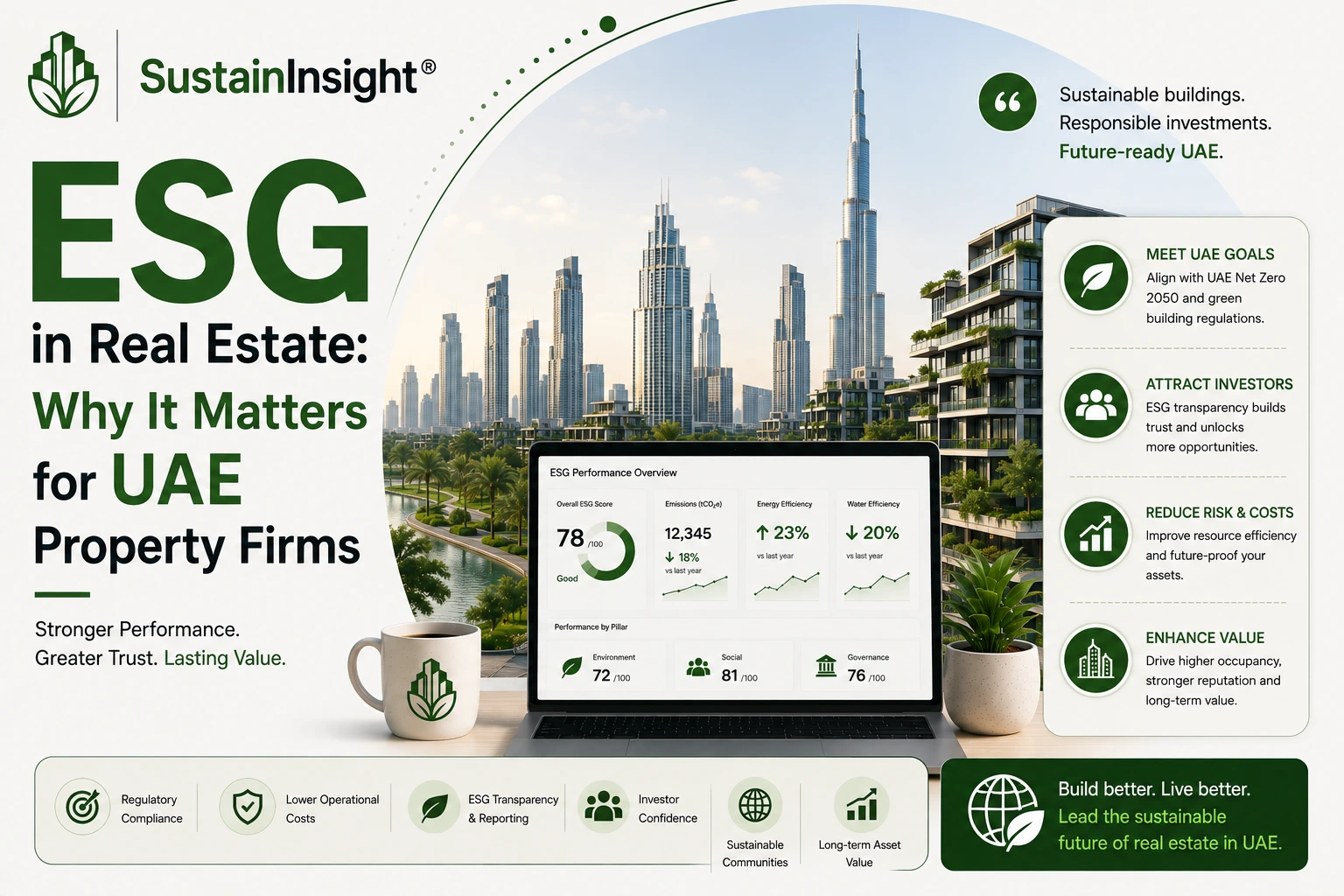
The real estate sector is one of the largest contributors to global carbon emissions, energy consumption, and resource use. As governments, investors, and tenants place greater emphasis on sustainability, ESG in real estate has become a critical factor in property development, investment, and asset management. In the UAE, where sustainable development is a national priority, integrating ESG principles into real estate operations is no longer optional—it is essential for long-term growth and competitiveness.
Today, investors are evaluating more than just financial performance. They also want to understand how organizations manage environmental impact, social responsibility, and corporate governance. This growing focus on ESG in real estate is encouraging developers, property managers, and commercial real estate companies to adopt transparent sustainability practices and improve operational efficiency.
In this article, we'll explore the importance of ESG in real estate, its key benefits, and how SustainInsight helps organizations simplify ESG reporting and sustainability management.
What Is ESG in Real Estate?
ESG in real estate refers to the integration of Environmental, Social, and Governance principles into property development, construction, operations, and asset management.
Strong esg and real estate practices help organizations create buildings that are environmentally responsible, socially beneficial, and governed through transparent and ethical business processes.
The three pillars include:
Environmental
-
Energy efficiency
-
Carbon emissions
-
Renewable energy
-
Water conservation
-
Waste reduction
-
Green building certifications
Social
-
Tenant health and wellbeing
-
Employee safety
-
Accessibility
-
Community engagement
-
Diversity and inclusion
Governance
-
Ethical leadership
-
Regulatory compliance
-
Risk management
-
Data security
-
ESG transparency
Together, these pillars strengthen real estate esg performance while supporting sustainable business growth.
Why ESG in Real Estate Is More Important Than Ever
Growing sustainability expectations are changing how properties are designed, managed, and valued. Organizations adopting ESG in real estate are better positioned to respond to market demands and regulatory changes.
Key drivers include:
-
Increasing investor focus on ESG
-
Rising energy costs
-
Climate-related risks
-
UAE sustainability initiatives
-
Growing tenant expectations
-
International reporting requirements
Businesses that embrace esg and real estate strategies can improve resilience while creating long-term value.
Key Benefits of ESG in Real Estate
1. Improves Property Value
Buildings with strong ESG performance often attract higher occupancy rates, premium tenants, and stronger long-term asset value.
Energy-efficient and sustainable properties are increasingly preferred by investors and occupiers.
2. Reduces Operating Costs
Implementing ESG in real estate encourages organizations to optimize:
-
Energy consumption
-
Water usage
-
Waste management
-
Building operations
These improvements reduce operating expenses while improving environmental performance.
3. Attracts ESG-Focused Investors
Investors increasingly evaluate sustainability performance before making investment decisions.
Strong ESG reporting in Real estate demonstrates transparency and responsible business practices, helping organizations attract institutional investors and sustainable finance opportunities.
4. Strengthens Regulatory Compliance
Governments around the world continue introducing sustainability regulations and climate-related disclosure requirements.
Reliable ESG reporting in Real estate helps businesses prepare for evolving reporting obligations while reducing compliance risks.
5. Supports Net Zero Goals
Reducing carbon emissions is one of the biggest priorities for the property sector.
Organizations managing esg in commercial real estate should monitor:
-
Scope 1 emissions
-
Scope 2 emissions
-
Scope 3 emissions
Accurate carbon accounting enables businesses to identify reduction opportunities and contribute to the UAE's Net Zero ambitions.
6. Enhances Tenant Satisfaction
Modern tenants increasingly prefer sustainable buildings that provide:
-
Better indoor air quality
-
Energy-efficient facilities
-
Healthier workplaces
-
Reduced environmental impact
Strong sustainability performance often leads to improved tenant retention and occupancy rates.
Challenges of Implementing ESG in Commercial Real Estate
Although ESG adoption continues to grow, many organizations face challenges implementing esg in commercial real estate.
Common obstacles include:
-
Manual ESG data collection
-
Disconnected reporting systems
-
Carbon accounting complexity
-
Measuring Scope 3 emissions
-
Multiple ESG reporting frameworks
-
Limited sustainability expertise
These challenges often slow reporting and reduce data accuracy.
How SustainInsight Simplifies ESG in Real Estate
Managing ESG in real estate requires reliable data, intelligent reporting, and continuous performance monitoring. SustainInsight is an AI-powered ESG and sustainability platform that helps developers, asset managers, and property companies automate sustainability management and ESG reporting.
Key capabilities include:
-
AI-powered ESG reporting
-
Automated carbon accounting
-
Scope 1, Scope 2 & Scope 3 emissions tracking
-
Real-time ESG dashboards
-
Sustainability KPI monitoring
-
Automated sustainability reporting
-
Compliance with GRI, ISSB, CSRD, TCFD, ISO 14064-1, and the GHG Protocol
-
Audit-ready reporting
For organizations focused on ESG in real estate, SustainInsight centralizes sustainability data across buildings and portfolios, enabling faster reporting, improved compliance, and better sustainability decision-making.
Conclusion
The importance of ESG in real estate continues to grow as sustainability becomes a key factor influencing investment, property value, tenant expectations, and regulatory compliance.
Organizations that integrate ESG into their real estate strategies are better positioned to reduce costs, improve operational efficiency, strengthen stakeholder trust, and support long-term business success.
With AI-powered technology from SustainInsight, businesses can simplify ESG reporting in Real estate, automate carbon accounting, and gain actionable sustainability insights that drive measurable environmental and business outcomes.