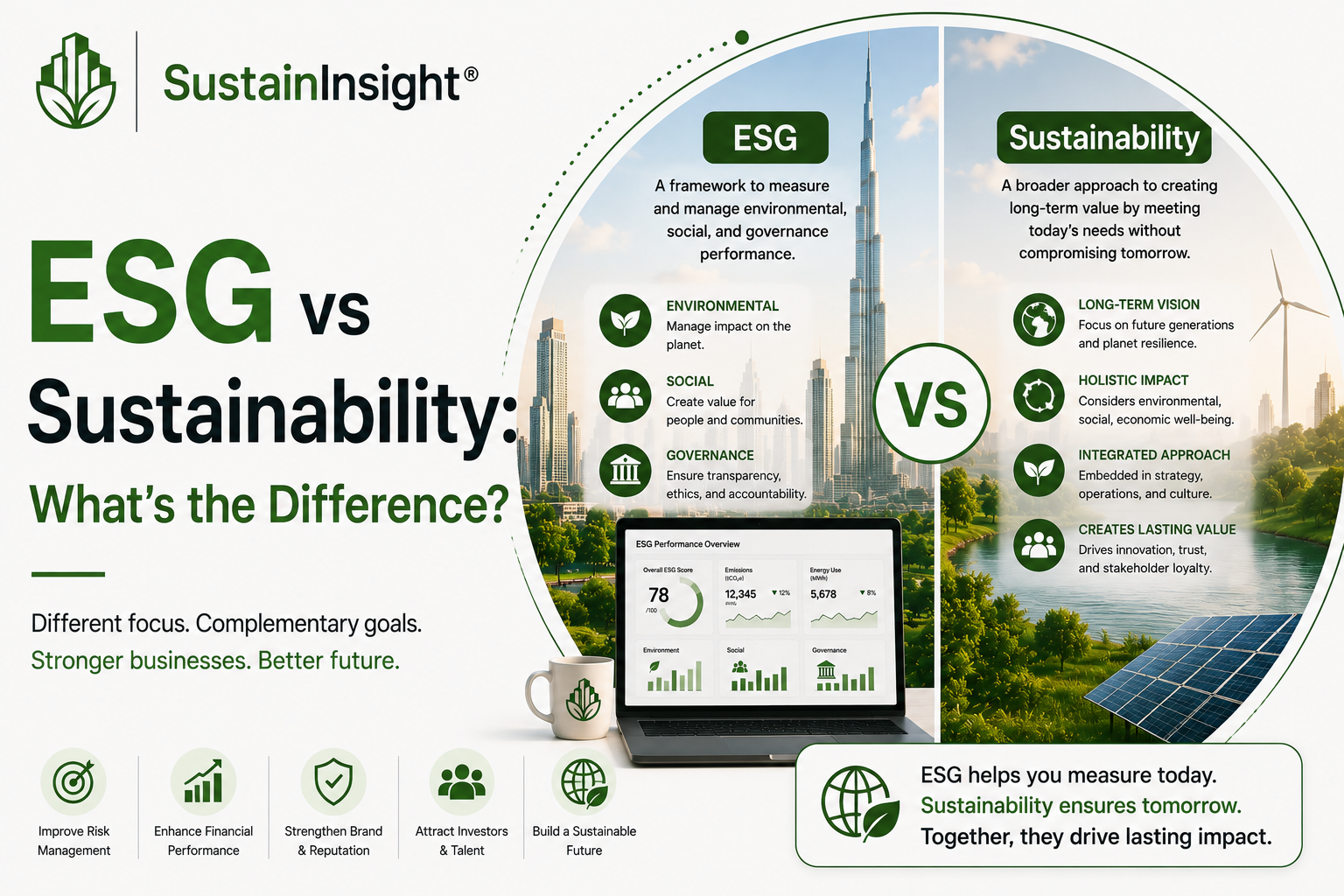
As sustainability becomes a major focus for organizations worldwide, many people use terms like ESG, sustainability, and CSR interchangeably. While these concepts are related, they serve different purposes in the corporate world.
Understanding ESG vs sustainability is important for businesses that want to improve transparency, meet investor expectations, and build long-term value.
In simple terms:
Sustainability focuses on long-term environmental and social responsibility.
ESG (Environmental, Social, and Governance) is a framework used to measure and evaluate sustainability performance.
Both concepts aim to create responsible and resilient businesses, but they differ in how they are implemented, measured, and reported.
This article explains the difference between ESG and sustainability, how they relate to CSR, and why businesses are adopting these frameworks today.
What Is Sustainability?
Sustainability refers to the practice of operating in a way that meets current needs without compromising the ability of future generations to meet their own needs.
For businesses, sustainability means minimizing environmental impact while supporting social well-being and economic growth.
Common sustainability initiatives include:
Reducing carbon emissions
Using renewable energy
Responsible waste management
Sustainable supply chains
Ethical sourcing of materials
Supporting local communities
Sustainability is often considered a long-term vision or philosophy guiding corporate responsibility. Companies adopt sustainability initiatives to reduce environmental impact and create positive social outcomes while maintaining profitability.
What Is ESG?
ESG (Environmental, Social, and Governance) is a structured framework used to measure and evaluate a company's sustainability and ethical practices. The ESG framework focuses on three key areas:
Environmental
How a company impacts the environment. Examples include:
Carbon emissions
Energy consumption
Climate risk management
Resource usage
Pollution control
Social
How a company manages relationships with employees, customers, and communities. Examples include:
Workplace diversity and inclusion
Employee wellbeing
Labor practices
Data privacy
Community engagement
Governance
How a company is managed and governed. Examples include:
Board diversity
Corporate transparency
Executive compensation
Risk management
Ethical business practices
Unlike sustainability, ESG focuses heavily on data, reporting, and measurable performance metrics. Businesses use ESG frameworks to communicate sustainability performance to investors, regulators, and stakeholders.
ESG vs Sustainability: Key Differences
Although ESG and sustainability share similar goals, they differ in purpose, measurement, and application.
In simple terms: Sustainability defines the goal, while ESG provides the measurement system.
Why ESG Became Popular in Business
While sustainability has existed for decades, ESG gained traction because investors needed standardized metrics to evaluate corporate responsibility. Traditional sustainability initiatives often lacked measurable reporting.
ESG solved this issue by introducing:
Standardized reporting frameworks
Quantifiable sustainability metrics
Data-driven performance evaluation
Today, investors increasingly analyze ESG data before making investment decisions because companies with strong ESG performance are often seen as lower risk and more resilient in the long term.
ESG vs CSR: Are They the Same?
Another concept often compared with ESG is CSR (Corporate Social Responsibility). While CSR, sustainability, and ESG share similar goals, they differ in approach.
Corporate Social Responsibility (CSR)
CSR refers to voluntary initiatives that companies undertake to contribute positively to society. Examples include:
Charity programs
Community development initiatives
Employee volunteering
Philanthropic donations
CSR initiatives often focus on social impact rather than measurable performance metrics.
Difference Between CSR and ESG
CSR focuses on corporate goodwill, while ESG focuses on accountability and measurable impact.
Why Businesses Need Both ESG and Sustainability
Rather than replacing sustainability, ESG complements it. Businesses use both frameworks together to build responsible and resilient organizations.
Sustainability Provides the Vision
Sustainability defines long-term goals such as:
Net-zero emissions
Responsible supply chains
Social equity
Resource efficiency
ESG Measures the Progress
ESG provides the tools to track and report progress through:
ESG metrics
Sustainability reports
Regulatory disclosures
ESG ratings
Together, ESG and sustainability help companies align ethical responsibility with financial performance.
Benefits of ESG and Sustainability for Businesses
Companies adopting ESG and sustainability strategies often experience several long-term benefits.
Improved Risk Management
Environmental risks such as climate change and resource shortages can impact business operations. ESG frameworks help organizations identify and mitigate these risks early.
Stronger Brand Reputation
Consumers increasingly prefer brands that demonstrate ethical and sustainable practices. Organizations with strong sustainability initiatives often build higher trust and loyalty.
Better Access to Investment
Many investors now prioritize companies with strong ESG performance. Companies that disclose ESG metrics transparently are often considered more reliable long-term investments.
Regulatory Compliance
Governments worldwide are introducing new ESG disclosure regulations. Organizations that proactively implement ESG strategies are better prepared for future compliance requirements.
The Future of ESG and Sustainability
The importance of ESG and sustainability will continue to grow as businesses face increasing pressure from investors, regulators, and consumers.
Several trends are shaping the future of corporate sustainability:
Expansion of ESG reporting regulations
Growing investor demand for ESG transparency
Increased focus on climate risk and carbon emissions
Adoption of ESG technology and data platforms
Organizations that integrate ESG frameworks with sustainability strategies will be better positioned to achieve long-term resilience and responsible growth.
Final Thoughts
Understanding the difference between ESG vs sustainability helps businesses build more effective sustainability strategies.
While sustainability defines the broader goal of responsible business practices, ESG provides the framework to measure and report progress.
Together, these concepts allow companies to create value for both shareholders and society.
As sustainability expectations continue to evolve, organizations that align ESG metrics with long-term sustainability goals will gain a competitive advantage in the global market.