Businesses today are expected to do more than generate profits. Stakeholders—including investors, customers, regulators, and employees—are increasingly evaluating companies based on how responsibly they operate.
This shift has made ESG (Environmental, Social, and Governance) a key framework for measuring corporate sustainability and ethical impact.
But what is ESG, and why has it become such an important factor in modern business strategy?
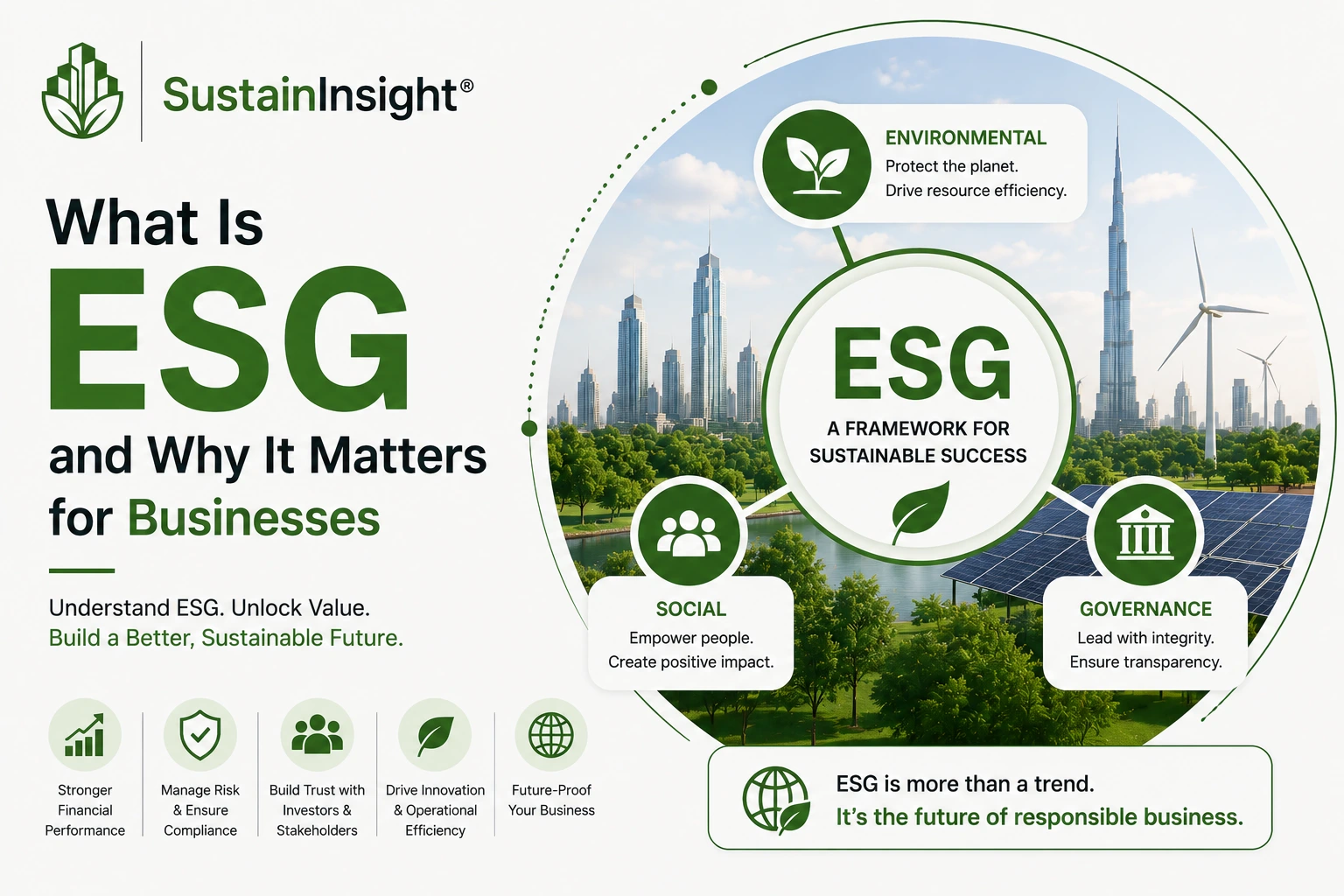
In simple terms, ESG refers to the three core factors used to assess how a company manages environmental impact, social responsibility, and corporate governance. These factors help investors, regulators, and stakeholders understand whether a company operates sustainably and responsibly.
Organizations that prioritize ESG are often better prepared to manage risks, build stronger stakeholder relationships, and create long-term value.
What Is ESG? Understanding the Meaning of Environmental, Social, and Governance
The ESG meaning comes from the three pillars that measure how a company operates beyond financial performance.
These pillars include:
Environmental
Social
Governance
Together, these factors help evaluate whether a business is managing its environmental impact, supporting society, and maintaining ethical leadership.
Let's explore each pillar of environmental, social, and governance in more detail.
The Three Pillars of ESG
Environmental: How Businesses Impact the Planet
The environmental component of ESG focuses on how a company affects the natural environment. Companies are expected to minimize their environmental footprint while supporting global sustainability efforts.
Key environmental factors include:
- Carbon emissions and climate impact
- Energy consumption and renewable energy use
- Waste management and recycling
- Water conservation
- Sustainable resource management
- Pollution prevention
Organizations are increasingly implementing carbon reduction strategies, climate risk management, and sustainability initiatives to improve their environmental performance. Businesses that manage environmental risks effectively can reduce operational costs, improve efficiency, and strengthen their brand reputation.
Social: How Companies Treat People and Communities
The social pillar of ESG evaluates how businesses interact with employees, customers, suppliers, and communities. Companies with strong social responsibility often focus on creating positive relationships and supporting inclusive business practices.
Key social factors include:
- Employee health and safety
- Workplace diversity and inclusion
- Fair labor practices
- Community engagement
- Customer satisfaction
- Data privacy and consumer protection
Organizations that prioritize social responsibility often experience higher employee engagement, stronger customer trust, and improved brand loyalty.
Governance: How Companies Are Managed and Controlled
The governance component of ESG focuses on leadership structure, corporate ethics, and decision-making processes. Strong governance ensures that companies operate with transparency, accountability, and integrity.
Governance factors include:
- Board structure and leadership diversity
- Executive compensation policies
- Corporate transparency
- Ethical business practices
- Anti-corruption policies
- Risk management frameworks
Companies with strong governance practices are often more resilient, better regulated, and more attractive to investors.
Why ESG Is Becoming Important for Businesses
Over the past decade, ESG has evolved from a niche sustainability concept into a core business strategy. Several global trends are driving the rapid adoption of ESG practices.
Increasing Investor Demand for ESG Transparency
Investors today are not only evaluating financial performance but also examining how companies manage environmental and social risks. Many institutional investors now incorporate ESG criteria into their investment strategies. Businesses that demonstrate strong ESG performance are often considered more stable, responsible, and future-ready. As a result, companies that improve their ESG performance can attract greater investment and strengthen shareholder confidence.
Growing Regulatory Requirements
Governments and regulators worldwide are introducing stricter ESG disclosure requirements. Companies may be required to report information related to:
- Carbon emissions
- Climate risks
- Sustainability initiatives
- Governance practices
Frameworks such as GRI, TCFD, ISSB, and CSRD are becoming increasingly important for corporate ESG reporting. Organizations that proactively adopt ESG frameworks are better positioned to comply with these evolving regulations.
Changing Consumer Expectations
Consumers are increasingly aware of sustainability and ethical business practices. Modern customers often prefer brands that demonstrate environmental responsibility, social impact, and transparent governance. Companies that communicate their ESG initiatives effectively can strengthen customer trust and differentiate themselves in competitive markets.
Key Benefits of ESG for Organizations
Implementing ESG strategies offers several long-term advantages for businesses.
1. Improved Risk Management
Environmental risks, supply chain disruptions, and governance failures can significantly impact business performance. ESG frameworks help companies identify potential risks early and develop strategies to mitigate them. This proactive approach improves resilience and reduces long-term operational risks.
2. Stronger Brand Reputation
Businesses that demonstrate commitment to sustainability and ethical practices often build stronger relationships with customers and stakeholders. A positive ESG reputation can enhance brand credibility and public trust.
3. Better Access to Investment
Investors are increasingly allocating capital to companies that demonstrate strong ESG performance. Organizations that report their ESG initiatives transparently often attract more investment opportunities.
4. Long-Term Business Sustainability
ESG encourages companies to adopt sustainable business practices that support long-term growth. This includes improving resource efficiency, strengthening governance frameworks, and creating positive social impact.
ESG vs Sustainability: Are They the Same?
Many people use ESG and sustainability interchangeably, but they are not exactly the same. Sustainability refers to the broader goal of operating in a way that protects environmental and social resources for the future. ESG, on the other hand, is a structured framework used to measure and evaluate sustainability performance.
In simple terms:
Sustainability is the goal
ESG is the measurement framework
Businesses use ESG metrics to track sustainability progress and communicate performance to investors and stakeholders.
How Businesses Implement ESG Strategies
Implementing ESG requires a structured approach that aligns sustainability goals with business strategy. Common steps in ESG implementation include:
Assessing current sustainability performance
Identifying environmental and social risks
Defining ESG goals and metrics
Implementing sustainability initiatives
Monitoring ESG performance
Reporting ESG progress to stakeholders
Many organizations also rely on ESG consulting services and ESG software platforms to manage sustainability data and reporting.
Key ESG Reporting Frameworks
The Future of ESG in Business
ESG is expected to play an increasingly important role in shaping the future of global business. As climate change, social inequality, and governance transparency become more significant concerns, businesses will face greater pressure to demonstrate responsible practices.
Companies that integrate ESG into their core strategy will be better positioned to manage risks, build trust, and achieve sustainable growth. Organizations that ignore ESG trends may struggle to meet stakeholder expectations and regulatory requirements.
Final Thoughts
Understanding what ESG is and why it matters is essential for businesses operating in today's sustainability-driven economy. Environmental, social, and governance factors are no longer optional considerations—they are critical components of responsible business strategy.
Organizations that adopt ESG principles can improve transparency, manage risks effectively, and create long-term value for stakeholders. As ESG continues to shape global business practices, companies that embrace sustainability and ethical governance will be better prepared to succeed in the future.